Feminist Climate Justice in the Face of Non-action.

By Lila Sax dos Santos Gomes In 2023, the South of Brazil was hit for the third year in a row by extreme rains, leading to intense flooding and infrastructure collapse. Zoraia Câmara left her house, fleeing with her dogs to her neighbors apartment, where she temporarily found shelter. “it’s not worth it” she told BBC news Brazil “this just keeps happening, I can’t stay … Continue reading Feminist Climate Justice in the Face of Non-action.

Why fighting gender disinformation is a form of climate action

Both climate and gender disinformation are rampant. How are they connected? When Catherine McKenna was appointed Canada’s minister of environment and climate change from 2015 to 2019, she was excited. It was the year that the world adopted the Paris Agreement – one of the most significant pieces of climate legislation to date – and McKenna led the negotiations on behalf of Canada. While in … Continue reading Why fighting gender disinformation is a form of climate action

When gender-based violence goes digital

Online violence against women has been on the rise. For women environmental  human rights defenders, it is becoming a constant, and deadly, threat. The death threats came per Whatsapp, Facebook, and the local radio channel – the main mode of communication for the residents of Tapajós, in the Brazilian state of Amazonia. Alessandra Munduruku, one of the leaders of the Munduruku women’s association who has … Continue reading When gender-based violence goes digital

The hidden health costs of climate change along India’s coasts.

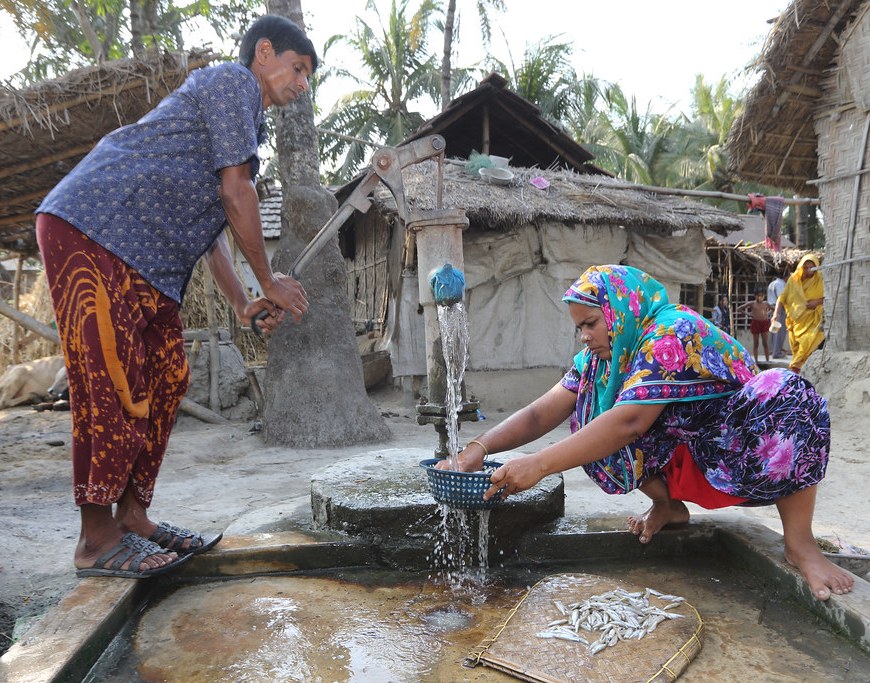
Rising sea levels and more frequent storm surges are causing salt levels to rise in the Sundarbans. Women are bearing the brunt of the impacts. Mousuni is a small island on the eastern coast of India. It lies within the world’s largest mangrove forest, the Sundarbans, situated in the delta formed by the confluence of three rivers, Ganga, Brahmaputra and Meghna, as they flow into … Continue reading The hidden health costs of climate change along India’s coasts.

Can Feminism Really be a Fix to Current and Future Global Crises?

By Njeri Kimotho There is a new buzzword in the development sector that promises a way to make the world better and development more inclusive: feminism. But how can one word be the response to so many global crises that the entire world is grappling with? Part of that answer is moving from the word to its application; Feminism is a commitment and it is … Continue reading Can Feminism Really be a Fix to Current and Future Global Crises?

Decolonizing Wealth in the Midst of Crisis

By Julia Lukomnik Feature image description: Two multi-colored hands support a brown skinned person wearing orange shorts and an orange off-the shoulder top. The person has blue flowers in their yellow afro. As the first Russian soldiers crossed the border to Ukraine, social media lit up with suggestions of how people with resources could help: from direct bank transfers to Ukrainian activists, to offering Ukrainian refugees … Continue reading Decolonizing Wealth in the Midst of Crisis

Decolonizing North-South Relationships in Global Health

By Yarrow Global “The master’s tools will never dismantle the master’s house.” – Audre Lorde Decolonizing Global and maternal health can’t be done without having those people who are most affected by negative maternal health outcomes at the table, such as women from Low-Middle Income Countries (LMICs). This is one of the key takeaways from the “Rethinking North-South Relations – A gendered challenge”  panel that … Continue reading Decolonizing North-South Relationships in Global Health

What Planetary Health Frameworks are Missing: Gender.

There is a popular cartoon that has shown up recently in my social media feeds. It generally shows three tidal waves of ever increasing sizes descending on a city. The smallest is COVID-19, the second is labelled recession, and the largest, so big you almost don’t notice it at first, is labelled climate change. The city that is about to be overwhelmed has a small … Continue reading What Planetary Health Frameworks are Missing: Gender.

A Care Revolution

By Lila Sax dos Santos Gomes In the 1960s, West Germany was the epicenter of an economic boom. Immediately after the end of the war and bolstered by the social free market, the German economy grew at a much faster rate than its European counterparts. This had an effect on the ways families were reconstituted in the rising economy. Financial security didn’t depend on a … Continue reading A Care Revolution