
A Q&A with Natalia Jiménez Galindo
It’s a known fact now that when it comes to climate change and environmental degradation, women are much, much more at risk for basically everything: death, poverty, displacement, and sexual violence. The gendered impacts of conflicts – higher rates of gender-based violence, disease etc – are also well known. At the same time, we also know that climate change and environmental degradation can fuel conflicts by compounding existing political or ethnic tensions. The reverse is also true. Gender equality in governing bodies often leads to much better environmental outcomes. Including women and their knowledge in everything from managing forests to marine environments leads to significantly greater improvements in conservation, often lowering deforestation rates and reducing conflicts. Having women in positions of leadership and including them in peace processes can greatly reduce the likelihood of violent conflict emerging.
In 2016, the Colombian government signed a peace accord with the prominent rebel group FARC. The civil conflict lasted six decades, claiming around 250,000 lives, displacing millions, and leaving millions more with lasting trauma. So it was a welcome sign when a special committee developed eight thematic areas for the inclusion of a gender perspective in the peace accords, and the government announced gender would be a central pillar. However implementation of gender continues to lag behind, according to a recent report. What’s more – and potentially connected – deforestation and environmental degradation have increased since signing the accords, with territorial conflicts still a major source of violence in the countryside.
Yarrow Global talked to researcher Natalia Jiménez Galindo, an Environmental Peace Building Consultant who has been studying the nexus of gender–environment–peace for a decade and a half on why a renewed focus on this nexus is needed and why it continues to be a challenge to grasp all three concepts at once.
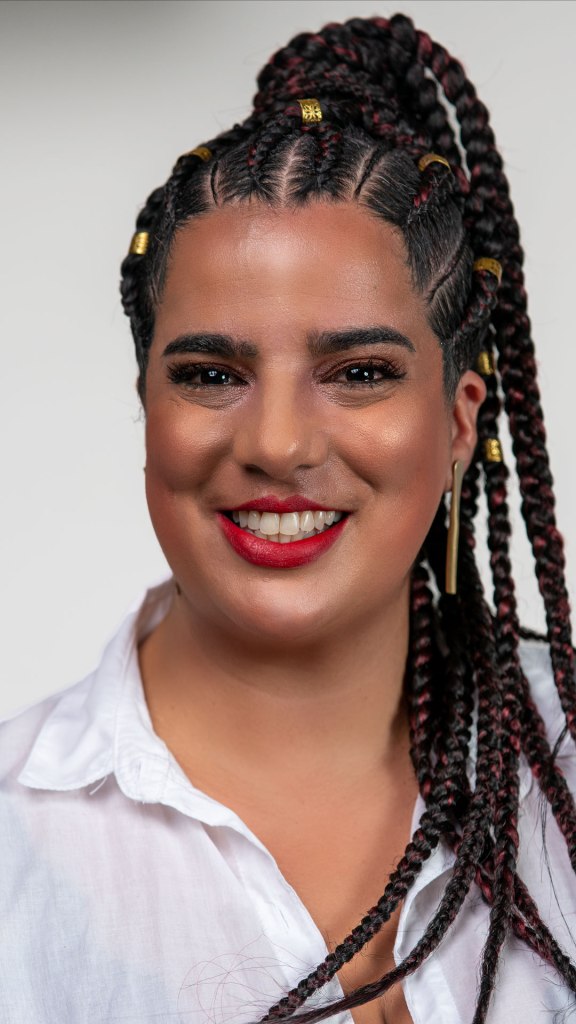
Yarrow Global: The intersection of gender, peacekeeping, and the environment seems both extremely relevant given what we know about women’s participation, and also very understudied. Why is that?
Natalia Jimenez Galindo: In academia and especially in development we are used to working in silos, and for some reason we love binaries: we understand the connection now between gender and the environment, between the environment and security, and between security and gender. But the biggest challenge has been to combine the three.
Since the creation of the Resolution 1325 on the UN Security Council, there has been another eight resolutions related to women and security. The year 2000 landmark resolution (S/RES/1325) recognized and reaffirmed the connection between women’s participation in the prevention and resolution of conflicts requiring their full involvement in the maintenance and promotion of peace and security. But it has been super difficult to talk beyond the topics of sexual harassment and sexual violence derived from war. And there has been almost no connection with the environment at all. Only one of the resolutions talks about climate change. So even in the international arena, there is a massive disconnection. For me, the lack of connection is mainly because women are seen as victims. So we don’t have another perspective on women and gender in security than the victims. Of course, we have to recognize that women often have been victims. But to include women in the peacebuilding perspective implies more than recognizing them as victims. Last year, the COP28 (the UN climate change conference) called attention to women, corruption and the environment. And five years ago the UN created a legal framework to establish the first work plan on gender and climate change. And the same with biodiversity. So this is still a very, very new perspective.
YG: You have been working in this field though for a while. How did you first get involved and what have you learned along the way?
NJG: I originally started off studying law. I assumed that through the law it would be easy to fix poverty, corruption or environmental issues. But I also realized that the Colombian tendency was to stay in conflict. It was very early in my career when I realized that instead of solving conflicts, sometimes law fuels conflict. So I had a clear understanding of the limits of law. At some point I was called in to advise the peace process with the ELN guerrilla group and the government. And I was surrounded by men, mainly old men. And I didn’t know what exactly my role was in this peace process. So I started to talk with other women. We ended up talking about the difficulties of having a gender perspective in extractive industries. In post-conflict countries like Colombia, and also Guatemala or El Salvador, it is often the main economic and development model. We have the same tendencies like in America, where after conflict the government will push a lot of destructive industries into Indigenous lands, rural areas, often areas where there is a lot of violence against women. So I started to study the differences between men and women in access to natural resources in these areas where conflict was present. And I realized that women have very little economic access to extractive industries, but especially don’t have access to the environment, to land.
For example the national atlas for private property (in Colombia) does not have data on gender and land ownership, but several studies show that the difference between men’s and women’s access is very very evident, like 90% or more of the land is owned and controlled by men. So I have been studying this now and working on this for 15 years. And there is an urgent need to address the particularities of that triple intersection between gender, security and environment in Colombia. So I decided to co-found my own organization, which is called PAG which in Spanish stands for Peace, Environment and Gender. What we have seen is that places where social environmental conflicts are present overlap with places where armed conflict is present, where there exists a lot of violence against women. These are also spaces where women can’t raise their hands to say there is corruption in this area. This is a difficult space to work in because deforestation is known to be one of the most corrupt industries. Corruption related to the environment means that there is also an imbalance of between men and women. Corruption is also linked to more violence against women, there is a correlative relationship. And this is very important for the movement to improve transparency in supply chains, for example. One of the biggest challenges that we face in Colombia and other Latin American countries is strengthening transparency policies for biodiversity and climate change which are really strongly connected to the fights to stop corruption.
So gender, peace and environment is at the core of sustainability and we are very aware of that. But when we participate in public spaces especially the big entities, national entities, what we see is that there is a very, very worrying lack of understanding of this triple connection. What I have heard from very important politicians here is that women’s role is to care for the forest – a perception that promotes and strengthens the role of women as caregivers. And this is, this is really, really, a damaging and dangerous
idea for many women environmental defenders. Many of the threats that they face are based on the belief that they are not properly caring for their family, that care-giving is their space rather than participating in politics. I have heard many women refrain from participating in public decisions – decisions that ultimately affect their lives in the long-term – because they don’t have money or care network to care for their children and homes in the places where they live in the short term. They face this horrible reality of being in charge of their families and wanting to also talk about what is happening to their territories. They don’t have a network of support that supports them in participating, so developing the national care system is a big opportunity for women to strengthen this network.
YG: What kind of challenges – conceptual or otherwise – do you encounter while working in this field?
NJG: Most of the international recommendations for action regarding gender equality have to do with promoting private property for women. But in some cases property has been and will be the catalyst for conflict. For us, promoting discussions and solutions around the ecological function of property more than private property is part of the peacebuilding perspective. Other problems that we have identified is that the need to diversify the spaces specifically for women’s participation beyond the spaces that are promoted in popular politics. Most of the environmental decisions in this country are not made in these (popular) places and the dimensions of participation of women in environmental management is still unknown. Right now we are creating an alliance with two large universities – in Georgetown, Washington and the Andes University here in Bogota – to study this. We want to know how women are really getting involved in most of the environmental decisions, especially in areas where the conflict still is alive, and the trends in women’s use of natural resources for the service of some sectors. We also want to create a methodology that allows for a diagnosis of violence based on gender and natural resources.
YG: Do you have any final thoughts on this gender-environment-peacekeeping nexus that you think is important to mention?
NJG: In Colombia, people think that gender is only a matter of women and not men. It is a similar dynamic to people with disabilities. If you create policies for disability, poor people, rich people, able people – everybody benefits. And this is what we don’t understand. We don’t understand that if we work to uplift women, everybody will benefit. Creating a dialogue between women and men is still very necessary here.
Changing the perspective of women as victims is also important. You can see nowadays how that is being translated to the climate change perspective. Several studies have shown that women are more often victims of natural disasters etc. But this perspective of women as victims also changes our possibilities of acting in a different way. Why? We are not victims because we are women. We are victims only because of social and cultural dynamics that made women more vulnerable – land ownership or the idea of women as “caregivers”. The problem is not to address women who are naturally vulnerable or victims, but to address the structural and cultural dynamics that made us vulnerable in the first place. In places where women have more access to opportunities, land, equality, resources, their vulnerability goes down, Japan is an example.
Finally I would say we need more recognition of women’s rights in places like the UN Environment (UNEP). Starting with these that I mentioned first, related with access, use and control over natural resources. Most of these rights belong to men due to the dynamics between women and men in regions where women oversee the care activities without any possibility even to study or to learn how to access a piece of land or anything. We also need to consider economic development based on bioeconomy as a way to change the model of extractive industries and also end deforestation. The bioeconomy has a lot to do with this dynamic between women and men. Bringing attention to the real imbalances between women and men in rural areas will help us to accelerate not only this relationship between women and men, but also between communities and state, and enterprises and also the environment. I mean, this is like a chain, right? And women and gender equality is still a big part of that chain.
Both images courtesy of Natalia Jimé

 Yarrow Global